Introduction
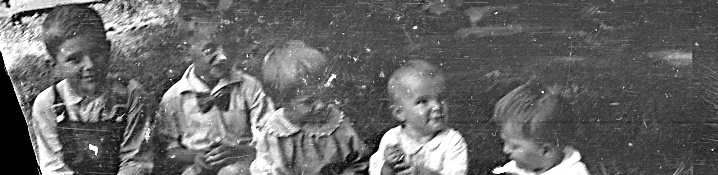
This is mainly going to be about how I practice family photography. More precisely, how I practice family snapshooting. I don’t have the desire, interest or talent to be a fine art photographer and I suspect most people are right there with me. Family photography is all about capturing the present for enjoyment in the future. When I’m truly old, I can travel back in time and escape the dark shadow for a while. My grown children can piece together what their Dad and Mom looked like when they were young and vibrant and from there maybe get a glimpse of who their parents truly were. Their children can do the same of them and maybe even gain insight into who their grandparents were. At some point though, Bazin’s “proper corruption” will inevitably occur. The photograph at the top of the page was taken by my Granddad. Probably. My mother is the third child. I think. The other children will pass from living memory when my Mom passes away. With my children’s passing, my Mom will pass from living memory and the utility of the above photo as a means of enlivening one generation for the next ends.
But it doesn’t matter. The family snapshot is a tool for the living not a means of personal immortality. It’s not an accident that color photo paper starts to fade after 40 years. One generation and a little more for the next. That’s all that is really needed. Anything more is vanity.
Principles
This is what I’ve learned by reading and testing what I’ve read. Some things listed will have a marginal effect but added together the marginals effects can make a difference. The bulk of this info is about color film 35mm photography.
General
- Photography is ultimately a documentary medium.
- “Art” photos are either technically advanced recordings of reality or imitations of paintings from the various art trends (Impressionist, Abstract, Hyperreality, etc).
- Take photos for the future. Photos have more impact as recordings of the past than as markers of the present.
- Take mostly photos of people. People pictures are the most interesting to other people.
- For yourself, take pictures of your stuff and your surroundings. Cars, house, toys, pets, and places that mean something to you. No one else cares but you will when you get old.
- The relevance of your photos won’t survive your children.
- Experiment with slide film because the printing process introduces factors you can’t control.
- When starting out, look at a pictures from a wide variety of photographic styles, pick a style you like, then copy that style in your own photos. Eventually and unconsciously, your personality will modify the style into your own personal style.
People Photos
- Use a lens between 70mm and 100mm.
- Use an aperture f/8 or bigger. Large apertures will keep the background blurry.
- Frame the person either three quarter length or head and shoulders.
- Use vertical framing for thee quarter length shots
- Use either horizontal or vertical framing for head and shoulders shots but place the head off center.
Travel Photos
- Travel photos can be used two ways. One, to hide behind the camera in order to abstract yourself out of the travel experience. Two, to sharpen you observation in order to pull yourself deeper into the travel experience.
- Bring a small camera and carry it with you everywhere.
- Use ASA 400 print film.
Wedding Photos
- Take classic wedding photos. If you have to go Artsy, hire two photographers. One for classic and one for “Art” photos.
Terminology
- Exposure - The amount of light falling on the film. Film speed, aperture, and shutter speed control exposure.
- Film Speed - The smaller the number, the more light needed to expose the film. The bigger the number, the less light needed to expose the film. Film speed is measured in ASA. ISO is equal to ASA.
- Aperture - The size of the lens opening. The smaller the number, the less light needed to expose the film. the greater the number, the more light needed to expose the film.
- Shutter Speed - The length of time the shutter stays open. The faster the shutter speed, the more light needed to expose the film. The slower the shutter speed, the less light needed to expose the film.
To get the best possible film Images
- Use slide film. Negatives have greater resolution but the prints made from negatives have less resolution.
- Use a “normal”, non-zoom lens. Either 35mm or 50mm.
- Use the sharpest aperture. Determine this though your own testing or published tests. As a general rule, apertures F4 through F8 are the sharpest.
- Use 1/250 shutter speed or higher if hand holding the camera. Otherwise, use a tripod.
- Use a lens hood.
Sunny 16 Outdoor Exposure Rule
- Use this rule for mechanical cameras with dead batteries.
- Use print film. The exposure latitude of slide film isn’t great enough.
- The rule applies between 10 am and 5 pm Eastern time.
- Set the shutter speed to the closest reciprocal of the film speed. For example, if the ASA of the film is 400, set the shutter speed to 1/500.
- Set the aperture as follows:
Outdoor Light        Shadow Detail          Aperture
Sunny                Distinct               f/16
Slightly Overcast    Soft around Edges      f/11
Overcast             Barely Visible         f/8
Heavy Overcast       No Shadows             f/5.6
Tools
Cameras for family photography must meet the following requirements:
- Must be usable without flash. This isn’t as important at first but your child is going to hate getting their picture taken later if it means getting blasted by a flash. This is also the toughest requirement to meet with modern (2009) cameras.
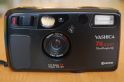
- Fast shutter response. The Yashica T-4 has a fast shutter response for a P&S but it was still too slow. After a while, my oldest learned that if the lens extended, shut your eyes because a blinding flash is coming next. Every shot after she learned this was of a child with partially shut eyes.
- Inexpensive. The above two requirements can’t be met with the average digital or film Point & Shoot but there are other options in the same price range. (As of 2010, film and film processing are no longer inexpensive or easily available.)
I discovered these requirements through trial, error and a bit of thinking after my first child was born. A camera meeting those requirements, combined with a little technique, will be sufficient to get good family photographs.
The following equipment article was started in the end stages of the digital camera revolution and never finished. Digital is now cheaper than film and local film sources all over the country dried up so there wasn’t much point in completing the article.
Camera
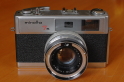
The family photographer needs a camera that can take good pictures without a flash so we won’t blind our kids, fast shutter response so we won’t miss that perfect but fleeting expression and inexpensive because baby gear is expensive and cameras are not baby gear. The most practical camera that meets the requirements is an autofocus 35mm film SLR. As of 2009, the autofocus film SLRs are in the price trough between available new and collectable. A manual focus SLR or rangefinder would also do but manual focusing requires practice and some of the cameras are becoming collectable. No digital cameras made in 2009 meet all the requirements. Film can be scanned to CD or web by the processing lab so the only thing film gives up to digital is immediacy and convenience.
Autofocus Film SLR
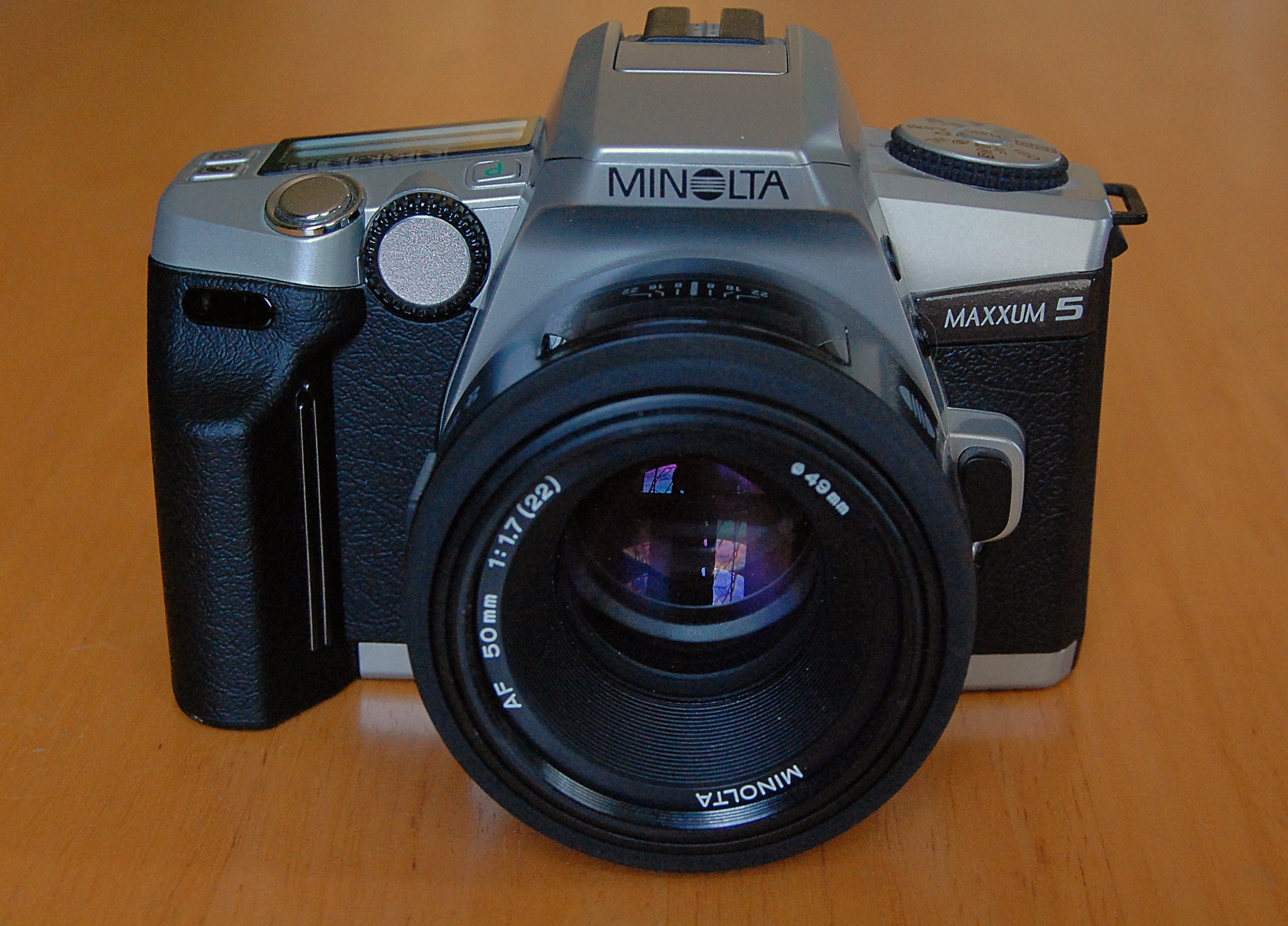
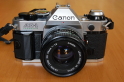
These are two examples of budget autofocus film SLRs available through the early 2000s. Both are capable cameras well suited to family photography. Neither are made today (2009). The Minolta pictured is mine. I bought it mainly because I was able to get the camera/lens combo for $300 less new than any Canon Rebel camera/lens combo used. Minolta was on the cusp of digital at the time and were dumping their film cameras and lenses in preparation for the move to digital. I preferred the Rebel because of the quiet autofocus but I couldn’t pass up the once-in-a-lifetime deal on the Minolta.
The only way to get inexpensive today (2009) is used. The following prices are for used gear from KEH in EXcellent cosmetic condition:
50mm f/1.8 II lens - $72
28-90mm f/4-5.6 "kit" lens - $70
28-105mm f/3.5-4.5 USM - $126
50mm f/1.7 lens - $144
28-80mm f/3.5-5.6 "kit" lens - $43
28-105mm f/3.5-5.6 lens - $89
I’ve included two zoom lenses as well. One is the default “kit” zoom provided with the cameras and the other is a better performing alternative. These zooms provide inexpensive wide angle and moderate telephoto but either 50mm will perform better than the zooms and the 50mm meets the no flash requirement. The zooms need a flash most of the time.